A feature for The Leader and the Team
TeamStrong.
For the leader who has changed how they lead, and now needs the team to come with them.

For the leader who has changed how they lead, and now needs the team to come with them.
You have moved. The team is still where you left it.
Something has shifted in how you run things. Maybe it came out of the one-to-one work: a new direction you are now sure of, a standard you are no longer willing to drop, a decision that the business cannot keep routing through you. You can see it clearly. They cannot, yet.
So the meetings still go the way they used to. The team still waits for you to make the move you wish they would make themselves. The new direction is on a slide somewhere, and the old habits are in the room. Good people, working hard, and still thinking around you rather than with you.
That is not a people problem. It is the normal gap between a leader who has changed and a team who have not been given the means to.
TeamStrong is six months of closing that gap, with you and with them.

Most TeamStrong work begins at the end of a LeadStrong or BuildStrong session, when the decision on the board turns out to need more than one person to carry it.
You have decided where the next two years go, and you can say it in a sentence. The team heard the sentence and went back to what they were doing. Alignment is not an announcement. It is six months of the team making decisions that fit the direction without checking with you first.
The way things get done here has to change: how people disagree, how work gets handed over, what happens when something goes wrong. You cannot instruct a culture. You can build one, deliberately, with the people who will live in it.
You have raised the bar on something, quality, pace, how the client is treated, and the team is finding out by getting it wrong. The standard needs to be understood, not just stated, and the team needs to hold each other to it rather than wait for you to.
You are moving into the strategic work, the part only you can do, and that means the team has to run the rest without you in every decision. Not because you have gone, but because you are finally doing your job.
If one of these is where you are, the team version of the work is the next step, and it starts with you.

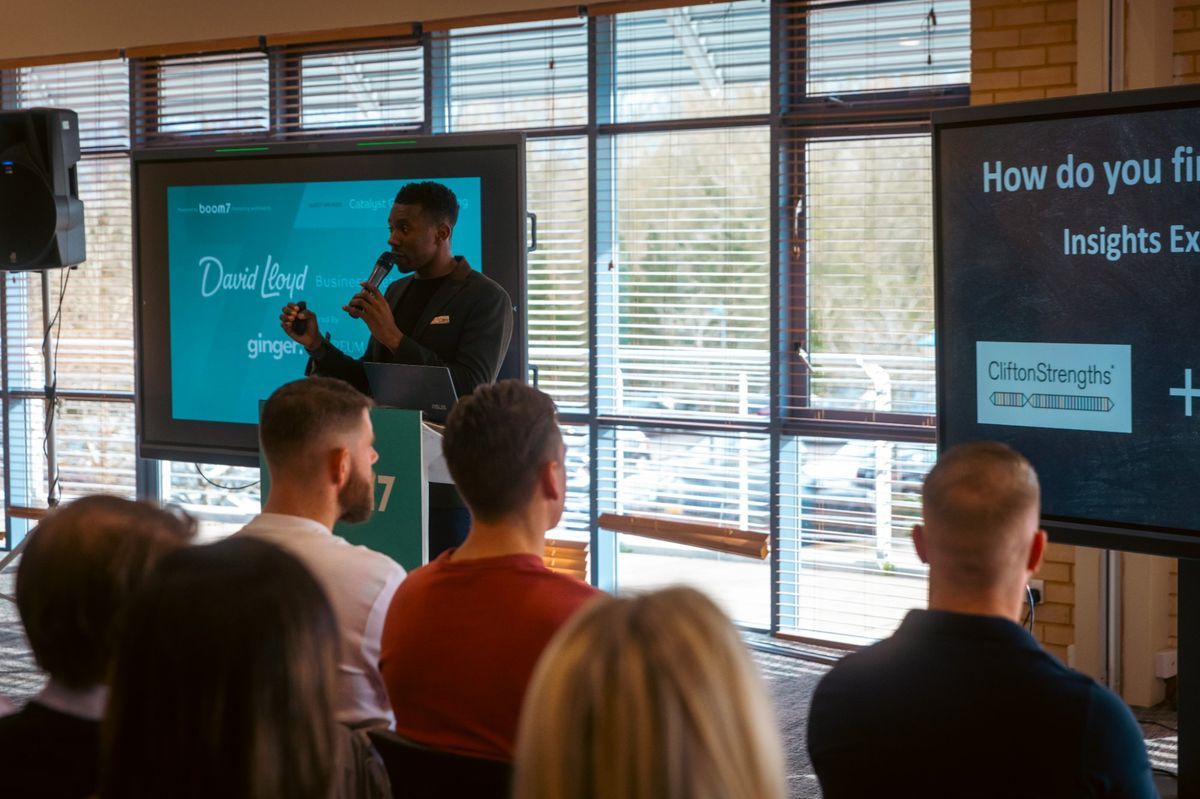
Fifteen years across organisational consulting and executive coaching, much of it as a senior business analyst and transformation specialist inside large organisations, which is where the habit of getting a whole team around one wall comes from. Gallup-certified in CliftonStrengths and a FITT16 practitioner. Teams and leaders worked with inside Arrow Planning, Toyota, Convatec, Cambridge University Press and the University of Oxford, and in owner-run firms of five to twenty-five staff. The credentials in full
"John leads me through them, then comes in and helps me actually activate them within the team."
What can I say about the work John has done with us today at Arrow Planning. He's just delivered a fantastic coaching session with the team. We've been working through some genuinely difficult subjects, and he's presented them in a way that's allowed everybody to engage properly with these difficult matters. It takes a real weight off my shoulders. The pressure and expectation isn't solely on me. I'm not standing there having to find a way through these problems alone. John leads me through them, then comes in and helps me actually activate them within the team, creating solutions that set the standard for the future.



TeamStrong runs alongside the thing you are trying to change, not instead of it. The direction, the standard or the handover is the live material; the work is the team learning to carry it without you in every room.
Your own LeadStrong or BuildStrong sessions carry on alongside, so what you want from the team and what you are seeing in them is worked at the board before it is worked in the room. You stay the leader of this. I am the person who makes it possible for you to lead it.
Every member of the team completes CliftonStrengths 34 and from it their FITT16 profile, then has a one-to-one with me to understand it. Most people have never had an hour on how they are actually wired and what that does to the people around them. It changes how they turn up to the next team session.
Monthly team sessions at the whiteboard, on the real work: the decisions in front of the team this month, worked through together until they are made. Not team-building. The team, building the thing you have asked for, and learning how it decides while it does so.
Your outcomes agreed; everyone's CliftonStrengths and FITT16 completed.
Individual one-to-ones; first team session.
Monthly team sessions on live decisions, the team taking more of the room each time.
The team runs a session with me watching rather than leading, and we judge the outcomes together.
Teams that want a day away from the building can add the Experience Day at The O2: a morning workshop, lunch at TOCA Social, an afternoon at Activate. It is a good day and it is optional, priced separately and at cost. The work does not depend on it.


One price for the six months of team work, sized to the team and agreed before we start. Teams of four to twelve. Your own one-to-one sessions are a separate engagement and run alongside.
Most teams know what each other does. Almost none know what each other is for: what drives a person, what they will go to the wall for, and what they quietly cannot stand. That is what FITT16 shows, and it is why it carries the understanding work in TeamStrong.
A profile of sixteen types, built from each person's CliftonStrengths Full 34, that maps the drive underneath their strengths. Not what they are good at, but what they are reaching for. When a team sees its FITT16 types side by side, the arguments that have been going on for years make sudden sense: two people pulling in different directions because they are driven by different things, not because one of them is difficult. The team's collective drive shows up too, and so do the gaps in it.
The 34 themes are the raw material the FITT16 profile is built from, and they stay useful at the practical level: who should run which meeting, who checks the detail, who is wasted on the detail, how two people with opposite profiles hand work to each other without friction. The team learns to read each other's profiles and uses the language day to day.
A team that understands why its members behave as they do stops explaining things three times and stops routing round each other. Work gets handed to the person built for it. Disagreements get shorter because everybody knows where they are coming from. The leader stops being the translator.
Every member gets their own profiles and an hour with me on them. The team gets the map of all of them together, on the wall, for the six months.
Most leaders have sat through a team day. Here is what they tell me put them off doing another, and how this is built against it.
| What you may have had before | What TeamStrong does instead |
|---|---|
| "A great day out. By Wednesday nothing had changed." | Six months, with the real decisions of the business as the material. The team changes by doing the work differently, month after month, not by remembering a day. |
| "Everyone got a colour and a label and then we argued about the labels." | FITT16 and CliftonStrengths are used to explain behaviour that is already happening, in one-to-ones first, so nobody is handed a label in front of their colleagues. |
| "The facilitator ran it. I sat at the side like a guest." | You lead this. Your own one-to-one sessions carry on alongside, and the team sessions work on what you have asked for. I make it possible for you to lead it. |
| "It turned into a complaints session about me." | The work is forward: the direction, the standard, the decision in front of us. Where something about how you lead is in the way, it comes to you first, at the board, not to you in the room. |
| "Trust exercises. Grown adults falling backwards." | A whiteboard and the month's live decisions. The only exercise is the work. |
By month six the team runs a session while I watch. They bring the decision, they work it, they make it, and the question "what would John want" does not come up because they already know, and because they have stopped needing to ask. For an owner, that is the first time the business has run on something other than you. For a corporate leader, it is the team your next role needs you to have already built.
If the team is doing what you asked and the problem is that you have not yet decided what to ask, that is one-to-one work, and TeamStrong will not help until it is done. If the real issue is one person who should not be there, six months with the whole team will not fix it and I will say so. If the team is bigger than twelve, it is two teams, and we talk about which one goes first. And if what you want is a good day out for a team that is already working, book the O2 day on its own and skip the rest.
I would rather say any of that in the first hour than three months in.
The fastest way to know whether TeamStrong fits the team is to start with the leader.
An hour at the board, on the thing you are trying to move the team towards. From there we both know whether the team version makes sense, and what it would be for.
Book a Leader SessionOne hour. No charge, nothing to prepare.
Wondering what this looks like when the relationship deepens? Read about going further →